Some products become popular because of marketing. Others become popular because they solve a very specific problem. Chlorine dioxide water purification drops belong to the second category. Their job is simple: Help make questionable water safer to drink.
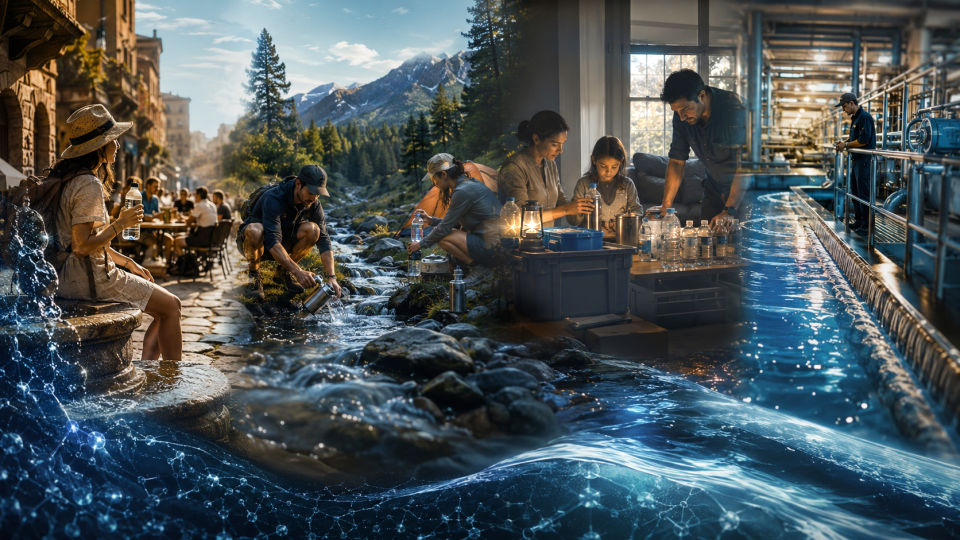
That simple purpose has made chlorine dioxide one of the most recognized portable water purification approaches used by:
- campers
- hikers
- backpackers
- RV travelers
- hunters
- preparedness communities
- emergency response situations
- international travelers
- municipal water systems
Its popularity comes from something unusual:
You do not carry gallons of treated water.
You carry the ability to create treatment only when needed.
Why Two-Part Chlorine Dioxide Systems Became So Popular
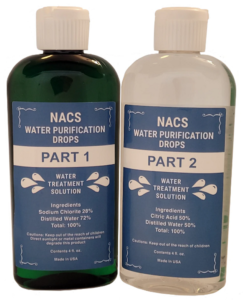
One of the appealing features of many chlorine dioxide systems is that the active purification chemistry does not exist until activation.
Most systems use:
- Part 1
- Part 2
When combined according to product instructions, chlorine dioxide forms and is then used to disinfect water.
People like this because it means:
- compact storage
- lightweight travel
- long shelf life before activation
- no electricity
- no pumping
- no bulky equipment
That practicality explains why these products show up everywhere from emergency bins to hiking packs.
Outdoor Use: Rivers, Lakes, Streams, and Backcountry Water
Outdoor enthusiasts know something important: Clear water is not necessarily safe water.
Mountain streams can still contain:
- animal runoff
- environmental contamination
- biological exposure
Outdoor water discussions frequently include concerns about organisms such as:
Common Outdoor Water Concerns
| Category | Examples Commonly Discussed |
| Protozoa | Giardia, Cryptosporidium |
| Bacteria | E. coli, Campylobacter, Salmonella |
| Environmental contamination | runoff, organic material |
Backcountry users often combine:
- source selection
- filtration
- chemical disinfection
- storage practices
Layering methods remain common.
Emergency Use: When Water Systems Fail
One of the biggest reasons people carry water treatment options has nothing to do with camping. It is emergencies.
After storms, floods, earthquakes, freezing events, or power outages, communities sometimes issue:
Boil Water Advisories
You have probably heard one:
Do not drink tap water.
Boil before use.
But what if:
-
- power is unavailable?
- fuel is unavailable?
- mobility is limited?
Portable purification became attractive because it offered another preparedness option.
Preparedness communities often store:
-
- water containers
- filters
- backup sanitation supplies
- emergency treatment products
Not because disaster is expected, but because disruption happens.
International Travel: Why Travelers Carry Tiny Bottles
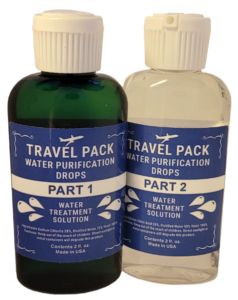
Experienced travelers think differently about water. Not because foreign places are unsafe. Because different environments create different exposures.
Travelers commonly think about:
-
- ice
- fresh produce
- beverages
- brushing teeth
- food preparation
- local water systems
Compact purification products became popular because:
-
- they travel easily
- some packaging fits carry-on liquid limits
- they reduce reliance on bottled water
- they support flexibility abroad
Municipal Water Treatment: The Big Version Most People Never Think About
Ironically, many people first encounter chlorine dioxide without realizing it. Municipal and industrial systems have long used chlorine dioxide in certain applications because of its disinfecting properties.
Water treatment systems evaluate different tools depending on:
- water source
- infrastructure
- target organisms
- treatment goals
Different regions use different approaches. But chlorine dioxide has remained relevant due to its broad sanitation applications.
Different Water Sources, Different Concerns
One of the most interesting parts of water treatment is that risk profiles change depending on where the water comes from.
| Situation | Typical Concerns |
| Mountain stream | Giardia, Cryptosporidium |
| Lake water | algae, environmental runoff |
| River water | agricultural contamination |
| Municipal systems | infrastructure failures, microbial events |
| International travel | unfamiliar microbial exposure |
| Emergency storage | stagnation and contamination |
This is why no one purification strategy solves everything.
Why Chlorine Dioxide Remains Popular
People continue choosing chlorine dioxide because of practicality.
Supporters often point to:
- portability
- shelf stability before activation
- broad sanitation use
- preparedness value
- lightweight travel
Its appeal is less about fear and more about confidence.
Confidence to travel.
Confidence to camp.
Confidence to prepare.
Confidence to adapt.

Water is one of those things people rarely think about until they suddenly have to.
That moment may happen:
- on a mountain
- during a storm
- overseas
- after a boil advisory
- during a power outage
When that moment arrives, many people discover something simple: Clean water is not a luxury; it is freedom. And carrying a way to create safer water may be one of the smallest preparations with one of the biggest impacts.
Disclaimer
This article discusses chlorine dioxide in the context of water purification and sanitation. Water treatment effectiveness varies by product, concentration, contact time, water quality, and contaminant type. Always follow product instructions and local public health guidance.
Leave a Reply